
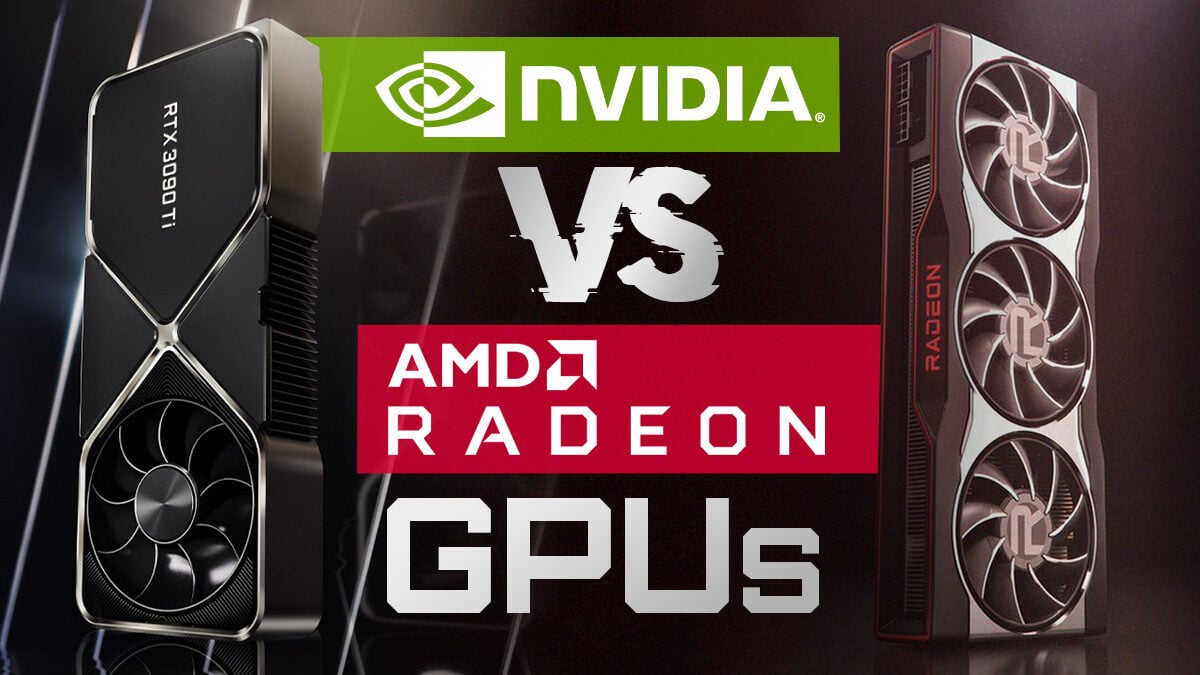
When you’re building or upgrading a gaming PC, one question always comes up: should you go for NVIDIA or AMD? Both make powerful graphics cards, but they have different strengths, weaknesses, and target users. Here’s my take on how they compare – and why the choice isn’t always obvious.
Performance and Architecture
As of 2025, NVIDIA still leads in raw performance. Their top-end RTX cards dominate 4K gaming and handle ray tracing like pros.
AMD, however, has caught up significantly. Their latest Radeon cards deliver impressive FPS at 1080p and 1440p, often at a lower price than NVIDIA. They still lag a bit in the most demanding ray-tracing scenarios.
In the mid-range segment, AMD often offers the best value – especially for students or casual gamers who want solid performance without paying for every advanced NVIDIA feature.
Features: Ray Tracing, Upscaling, and AI
NVIDIA is known for its strong ecosystem: DLSS, Reflex, Broadcast, and now AI-powered image enhancements. These features can give a real edge in games that support them.
AMD has its own answer: FSR (FidelityFX Super Resolution). It works on a wide range of hardware and is improving fast, but NVIDIA still has a slight edge in image quality and stability.
If you’re gaming in 4K and want the most realistic visuals, NVIDIA is hard to beat. But if you want good performance at a more reasonable price, AMD delivers very well.
Price, Power, and Value
AMD cards generally cost less for similar performance and often come with more VRAM.
NVIDIA cards are usually more expensive – especially in the high-end – but offer advanced features and better support for creative workloads.
When it comes to power consumption, both have improved a lot. AMD is more energy-efficient now, but the top NVIDIA cards still draw a lot of power and need a solid PSU.
My Take
If I had to choose today, depending on budget, I’d say:
- Tight budget / student build: AMD gives the most bang for your buck.
- 4K, ray tracing, streaming, or content creation: NVIDIA is still the king.
- Balanced choice: Watch prices – they fluctuate a lot, and the “best buy” can change month to month.
In the end, it’s not just the brand on the card that matters – it’s what fits your needs: resolution, game types, and how future-proof you want your setup to be.
What Do You Think?
If you had a budget of around $200–$250, which card would you pick – an AMD or an NVIDIA?
And if you had $500–$600, would you go for a flagship RTX card, or save money with a “good enough” Radeon?


Боб
Круто